
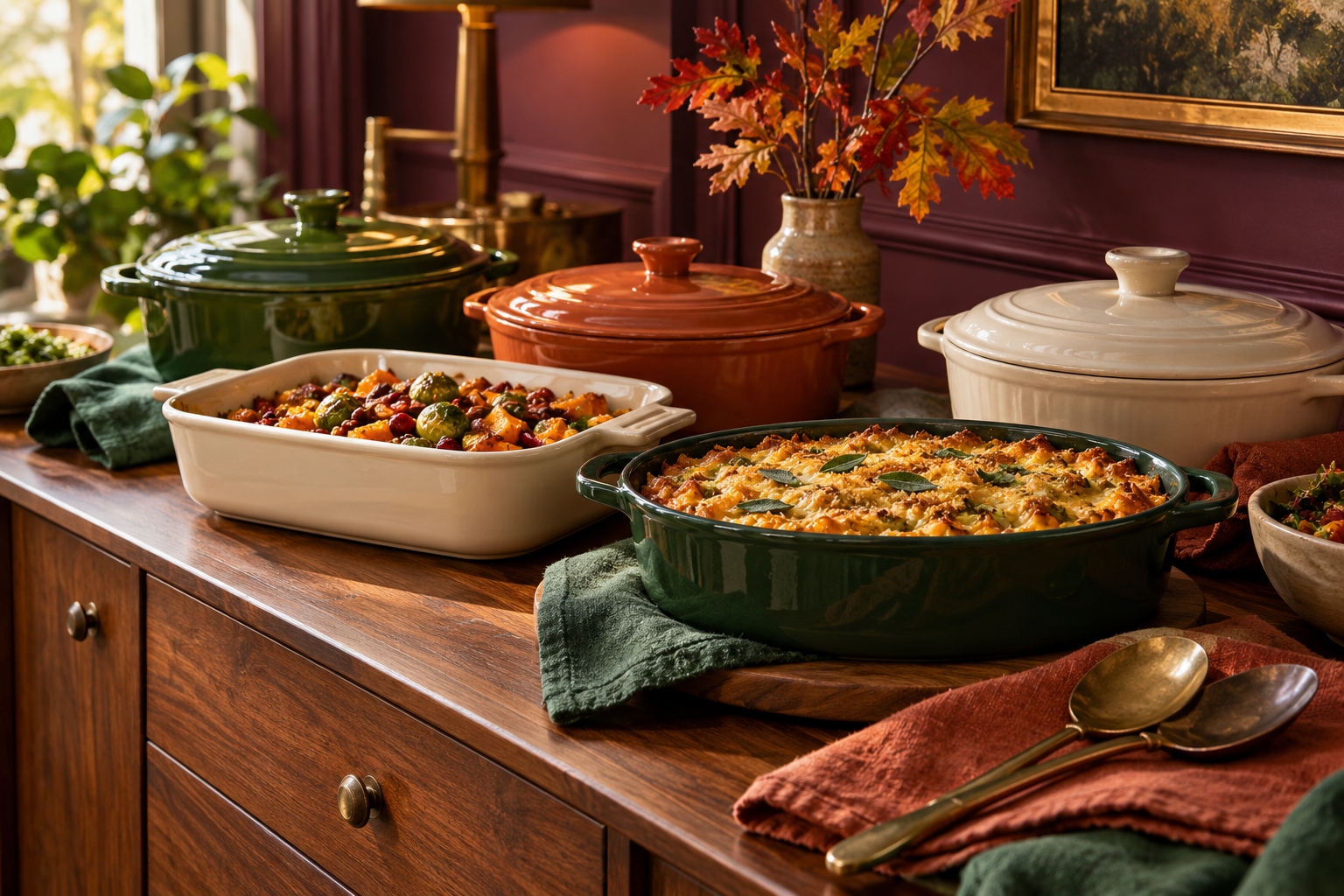
For a small Friendsgiving, choose the dishes that fit your kitchen before adding everyone’s favorites. A turkey breast, a stovetop vegetarian main, one hot side and a cold salad can make a complete dinner without a queue of casseroles waiting for the oven.
The example below is for eight adults, including two who want a vegetarian main, with dinner at 6 p.m. It uses one oven and two burners. Change the serving targets and ingredients for your group, then put the actual recipe times into the schedule. In this version, the host handles the three hot dishes, while guests can bring agreed cold dishes, rolls or dessert. These are menu-planning ideas, not recipes tested by Daily Decide.
Still deciding who will contribute? Use the Friendsgiving who-brings-what guide and free planner for that part. This plan covers what to serve and how to get it ready together.
A menu that gives each appliance one job
Roast turkey breast: Plan six main-course servings for the turkey eaters, plus any leftovers you deliberately want. Choose the breast size from your recipe’s yield or the package guidance; bone-in and boneless weights are not interchangeable. The turkey gets the oven to itself.
Lentil and vegetable stew: Choose a stovetop recipe yielding about four main-course portions. In this example, that covers two vegetarian diners and leaves some for other guests to try. Confirm the recipe, broth and toppings with the people relying on it. Make it the day before, refrigerate promptly in shallow containers, and reserve one burner for reheating. USDA explains cooling and storing cooked food.
Mashed potatoes: Plan eight side portions, using a recipe you know. This is the second burner’s job. Check the butter, milk and other ingredients against the group’s needs before treating it as a shared side.
Cabbage and apple slaw: Plan eight side portions. Choose a recipe that can be served cold, prepare the components your recipe allows ahead of time, and keep them refrigerated. Add any last-minute ingredients and dressing according to the recipe.
Cranberry sauce and rolls: Use the sauce’s stated yield and start with one roll per person, adding more if your group usually wants them. Choose rolls you are happy to serve without warming. Check ingredients rather than assuming either item suits every diet.
Apple pie or another dessert that needs no last-minute baking: Plan eight portions. Homemade, bakery-bought and a guest’s contribution all work. Follow its recipe or label for storage, and include dessert when checking dietary needs.
Water and one other drink: A pitcher of water and a drink the group enjoys are enough to start. Put them away from the food-preparation area so guests can help themselves.
For an all-vegetarian gathering, omit the turkey and increase the stew to eight main portions, with any extra tastes or leftovers included in that total. For more help with the whole plate, use our vegetarian Thanksgiving menu guide. A vegetarian label does not establish allergy safety; discuss ingredients and preparation needs separately.
Shop from the finished menu
Open each chosen recipe and combine its ingredient list with the others. Check the pantry, refrigerator and freezer before buying more. Write down which quantities are for a main course and which are for a side; eight side portions of stew will not necessarily feed eight people as dinner.
Then check the nonfood pieces:
- A roasting pan and a food thermometer that work for the turkey.
- Two pots that fit on the burners at the same time.
- Refrigerator space for the actual containers, not just the ingredients.
- A serving utensil for each dish and a clear place to set it.
- Shallow containers for cooling food and packing leftovers.
If the pots crowd each other, simplify before shopping. Dropping the mashed potatoes and serving the stew with rolls removes one hot dish. For guests bringing a different cold side, our no-oven potluck ideas can help.
Build the cooking times backward from dinner
Write 6 p.m. dinner at the top of your kitchen note. For each hot dish, work backward through serving, finishing or resting, cooking or reheating, and preparation. Include preheating and a little room for delay.
For example, suppose your chosen main’s instructions allow two hours in the oven and 20 minutes for resting and carving. Adding 15 minutes for preparation and preheating, plus 15 minutes of flexibility, gives this planning example:
- 3:10 p.m.: Begin preparation and preheating.
- 3:25 p.m.: Planned oven start.
- 5:25 p.m.: Estimated finish, subject to a thermometer check.
- 5:25–5:45 p.m.: Rest and carve according to the recipe.
- 5:45–6 p.m.: A small margin for finishing and serving.
Those times illustrate the calculation; they are not cooking instructions for every turkey breast. Use the timings for your actual size, recipe and appliance. Turkey breast must reach 165°F in its thickest part, measured with a food thermometer without touching bone. USDA explains thermometer placement. FoodSafety.gov’s roasting and thawing charts provide the safety reference and approximate timing ranges.
Do the same calculation for the potatoes and stew. A larger pot or food starting cold can change the reheating time. Do not assign the same burner to two dishes at once, and do not use a scheduled finish time as proof that food is cooked.
What to do before the day
About a week before
Confirm the headcount and food needs, choose the recipes, and decide how much leftover food you actually want. If guests are contributing, agree on their dishes and arrival times before writing the shopping list.
Check the frozen turkey’s thawing instructions now. FoodSafety.gov allows about 24 hours in the refrigerator for every 4 to 5 pounds. Put the thawing start on your calendar using the actual weight and package directions; it may need to begin several days before dinner. Never plan to thaw it on the counter. See the turkey thawing chart.
Two days before
Finish the kitchen schedule and grocery list. Check that the serving dishes, pots and refrigerator containers fit. Choose the drink station and clear the surface where arriving dishes will land.
Buy perishables according to their storage requirements and your cooking date. Buying everything early is not useful if it will not keep safely until you need it.
The day before
Cook the stew, divide it into shallow containers, and refrigerate it promptly. Do not leave a full pot on the counter to cool for hours. Prepare the slaw components and cranberry sauce only as far ahead as their recipes allow. Keep refrigerated food at 40°F or below. USDA’s storage guidance applies here.
Prepare or collect dessert and follow its storage instructions. Set out the empty serving dishes, label what goes in each, and put its utensil beside it. Count plates and glasses. Leave enough refrigerator space for the food arriving tomorrow.
A 6 p.m. dinner-day timeline
The cooking start times come from your recipes. The checkpoints below organize the surrounding jobs.
By early afternoon: Finish non-cooking tasks, set the table and put the kitchen schedule somewhere visible. Keep raw poultry separate from salad ingredients and ready-to-eat food. The FDA’s buffet guidance covers cleaning, separation and temperature control.
At the calculated start times: Start the turkey in the oven, cook the potatoes on burner one, and reheat the stew on burner two. Reheated cooked food should reach 165°F throughout, checked in several places with a thermometer. USDA’s reheating guidance explains the check. If the stew or potatoes finish early, keep them at 140°F or above until serving, checking the food rather than relying on a low setting. USDA’s hot-holding guidance distinguishes holding from reheating.
5:30 p.m., guests arrive: Have one person handle coats and drinks while the cook stays with the food. Put chilled contributions into the refrigerator promptly. If a guest is bringing food, agree on its journey and handoff in advance using the Thanksgiving food-transport guide.
5:45 p.m., readiness check: Confirm the turkey reached 165°F before it began resting, finish the potatoes, and complete the slaw as its recipe directs. Leave cold dishes refrigerated until serving. Put rolls, serving utensils and trivets in place. If the turkey needs longer, move dinner back rather than serving it undercooked; keep the other food safely hot or cold while you wait.
6 p.m., serve when ready: Bring out the cold dishes and serve once the turkey has rested and been carved. Point out the vegetarian choices without making the guest responsible for explaining them. Keep the appropriate serving utensils with each dish.
After the first serving: Pack food you will not keep serving instead of waiting for everyone to leave. Keep hot food at 140°F or above and cold food at 40°F or below if it remains out. Otherwise, refrigerate perishables within two hours, or one hour above 90°F. Count time without safe hot or cold temperature control across preparation, transport and serving; moving a dish to a different table does not restart the clock. Discard food that exceeds those limits. FDA safe-buffet guidance.
Divide leftovers into shallow containers and refrigerate promptly. Use refrigerated cooked leftovers within 3 to 4 days, or freeze them for longer storage. USDA leftovers guidance. If guests are taking food home, make the leftover-container and transport plan before dinner.
Keep one cut you can make
Choose the optional dish before the day starts. In this menu, rolls can cover the starch if the potatoes become too much work. Cranberry sauce can be bought rather than made. Dessert does not need warming.
Keep the dishes people are depending on, especially an agreed vegetarian main or an option that meets a guest’s specific needs. Let an extra go before adding another last-minute cooking job.
Once the menu and times are settled, return to the Friendsgiving contribution planner to confirm who is bringing each agreed item.
Food-safety sources checked November 4, 2026. Follow the recipe and package instructions for the foods you choose; this is a planning framework, not a tested set of recipes.