
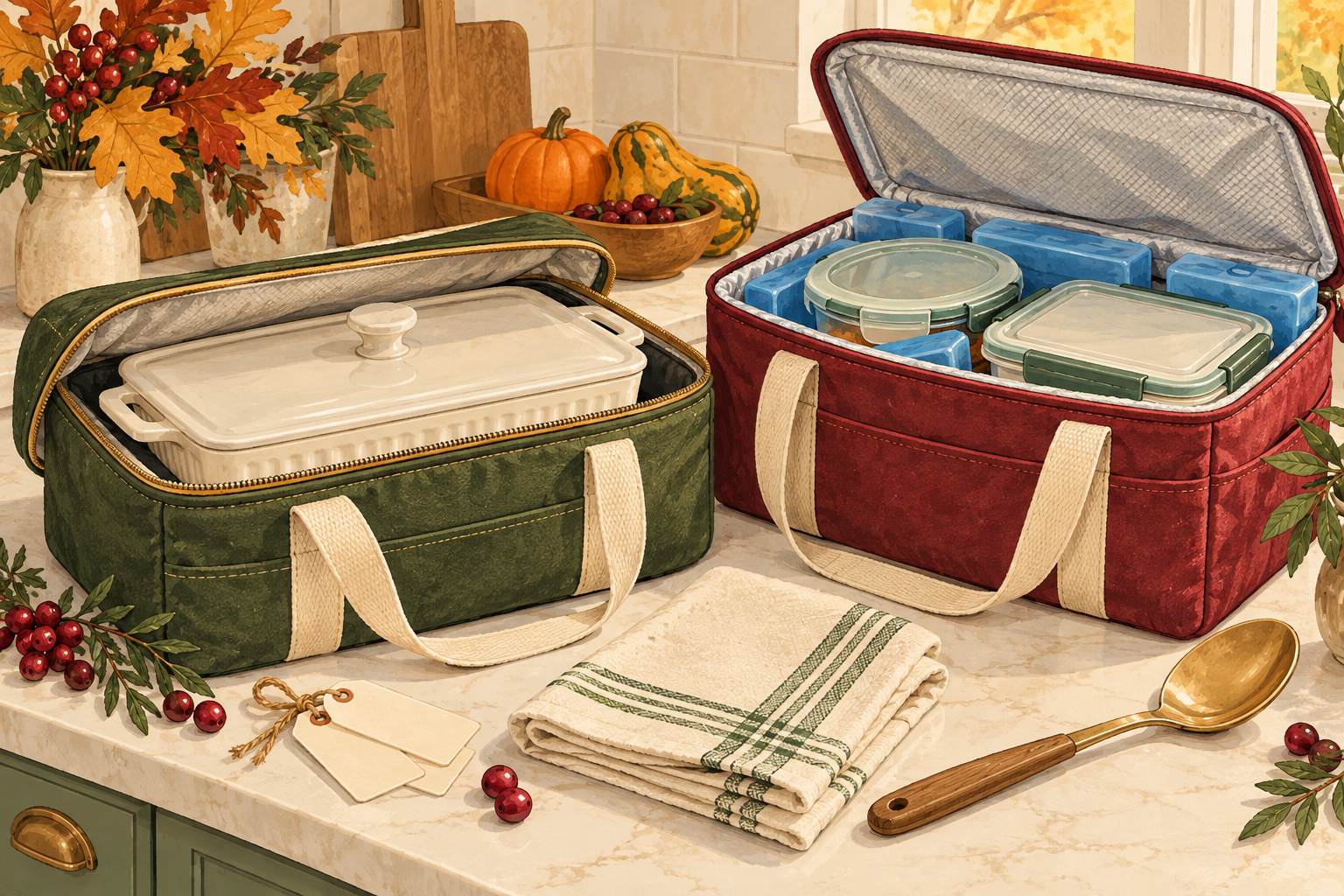
Original AI-generated editorial illustration, not actual product photography.
You’ve agreed to bring a side dish. Now comes the part recipes rarely explain: getting it across town without a gravy spill, a squashed topping, or a surprise request for the host’s already-full oven.
Start with the arrival plan, then choose the container. A useful carrier makes the trip easier, but it can’t decide when dinner starts or keep food safe indefinitely.
This article contains affiliate links. As an Amazon Associate, Daily Decide earns from qualifying purchases.
Ask about the kitchen before you pack
A quick message can prevent a lot of awkward doorway juggling:
“I’m bringing the sweet potato casserole. Would you prefer it chilled for reheating or hot and ready to serve? Will there be oven or refrigerator space when I arrive?”
Include the dish’s size if it needs oven space. Ask when people will actually eat, not just when you should arrive. A four o’clock invitation might mean dinner at six.
If the host can’t promise reheating space, choose another agreed-upon dish rather than hoping to squeeze yours in. For help choosing the contribution itself, start with what to bring when you’re invited over. This guide covers what happens after you’ve chosen it.
Choose hot or cold travel deliberately
For a dish that needs refrigeration, “it still feels a little warm” isn’t a useful safety check. The FDA recommends holding hot food at 140°F or above and cold food at 40°F or below. Check with a food thermometer.
These are holding temperatures, not cooking targets. For example, FoodSafety.gov lists 165°F for casseroles and reheated leftovers. Heat food properly before hot holding; a carrier isn’t a reheating appliance.
If perishables aren’t maintained hot or cold, discard them after more than two hours at room temperature, or one hour when the surrounding temperature exceeds 90°F. Don’t treat the drive, the kitchen counter, and the buffet as separate allowances. Plan the whole journey, including delays. See the FDA’s safe buffet guidance.
An insulated carrier slows temperature change. It doesn’t actively heat the food or prove that the food stayed hot. Follow its instructions about how hot a dish can be when loaded.
For a longer trip, properly chilled food in a well-packed cooler may be more manageable than trying to maintain a hot casserole, provided the host has agreed to reheat it. Don’t leave a large pan on the counter to cool for hours. Divide large amounts into shallow containers for prompt refrigeration, following the FDA’s cooling guidance.
Give cold food its own cooler
Pack already-chilled dishes with ice or frozen gel packs. Keep cold food at 40°F or below, limit opening, and move it into the host’s refrigerator promptly if that’s the agreed plan. The FDA’s food transport advice also suggests separating drinks from perishable food so frequent drink stops don’t repeatedly warm the food cooler.
Keep the hot casserole carrier separate. Putting warm dishes beside chilled dips makes both jobs harder.
Leave room for the cold packs when checking whether your containers fit. A cooler that fits the dish but nothing around it isn’t a complete packing plan. A thermometer helps you check conditions; the weather forecast and a cold-feeling car trunk don’t replace temperature control.
Pack for a sudden stop
Use a clean, intact container with its proper lid. Check the rim and seal, close every latch, and leave the manufacturer’s recommended headspace. A casserole lid that simply rests on top isn’t a spillproof seal.
Carry sauces in a separate tightly sealed container suitable for the contents and temperature. Save the pretty open gravy boat for the table. Put containers upright inside a washable secondary tray or carrier, then secure the load on a level surface away from pedals. Don’t balance a hot dish on a passenger’s lap.
Foil pans need support underneath, especially when full. Use a rigid supporting tray and lift from the base, not the flimsy edges.
Pack crisp onions, croutons, nuts, and other finishing touches separately when the recipe allows. Add them at the destination so they don’t spend the drive absorbing steam. Keep any refrigerated topping in the cooler, too.
Buy only the piece your packing plan is missing
Start with what you already own. These are research-based options, not products we’ve personally road-tested.
- For one covered casserole: the Lifewit casserole carrier in Grey Large offers a dedicated carrying bag. Measure the entire dish, including handles and lid, against the carrier’s usable space. Don’t assume a pan’s recipe size describes its outside measurements.
- For a larger chilled side: the Rubbermaid Brilliance 9.6-cup two-container set gives you separate lidded containers rather than one oversized pan. The listing counts the two lids in its four-piece total. Check whether the portions suit your dish.
- For chilled sauces or small toppings: the Rubbermaid Brilliance 1.3-cup five-container set keeps components separate. Its ten-piece description includes lids. These are small containers, not family-size casserole replacements.
- For smaller chilled dishes plus cold packs: the Igloo Classic Playmate 16-quart cooler in Red is a hard-sided option. Check the interior dimensions against your actual containers and allow space for ice or gel packs. A can-capacity label doesn’t tell you whether a casserole will fit.
A leak-resistant container still needs correct closure and upright packing. Follow the product’s heating, cooling, and care instructions; storage lids and insulated bags don’t automatically belong in an oven.
Label the dish and bring its serving spoon
Attach a simple note with the dish name, ingredients, relevant packaged-ingredient labels, and any agreed reheating instructions. Put your initials on reusable dishes and lids so they find their way home.
If someone has a food allergy, talk with them or the host beforehand. An ingredient list helps, but it doesn’t guarantee that a home-prepared dish is free from cross-contact. Don’t promise “allergy-safe” just because an ingredient wasn’t intentionally added.
Bring the serving spoon, a clean trivet if needed, and the separate toppings. Keep utensils covered during travel. When you arrive, tell the host whether the dish needs refrigeration, reheating, or immediate service before settling in.
Quick questions
Can I put a hot dish and a cold dessert in the same insulated bag?
Use separate carriers. Each needs its own temperature plan.
Does a casserole carrier make a loose lid leakproof?
No. Treat the bag as carrying support and insulation, not a replacement for a suitable closure.
Should I bring containers for the trip home?
Yes, if you expect leftovers. Plan cold storage and the return journey, too. Our Thanksgiving leftover-container guide covers that separate decision.
The most helpful contribution arrives with its spoon, its ingredients, and a clear plan. That’s much easier on the host than another mystery pan.