
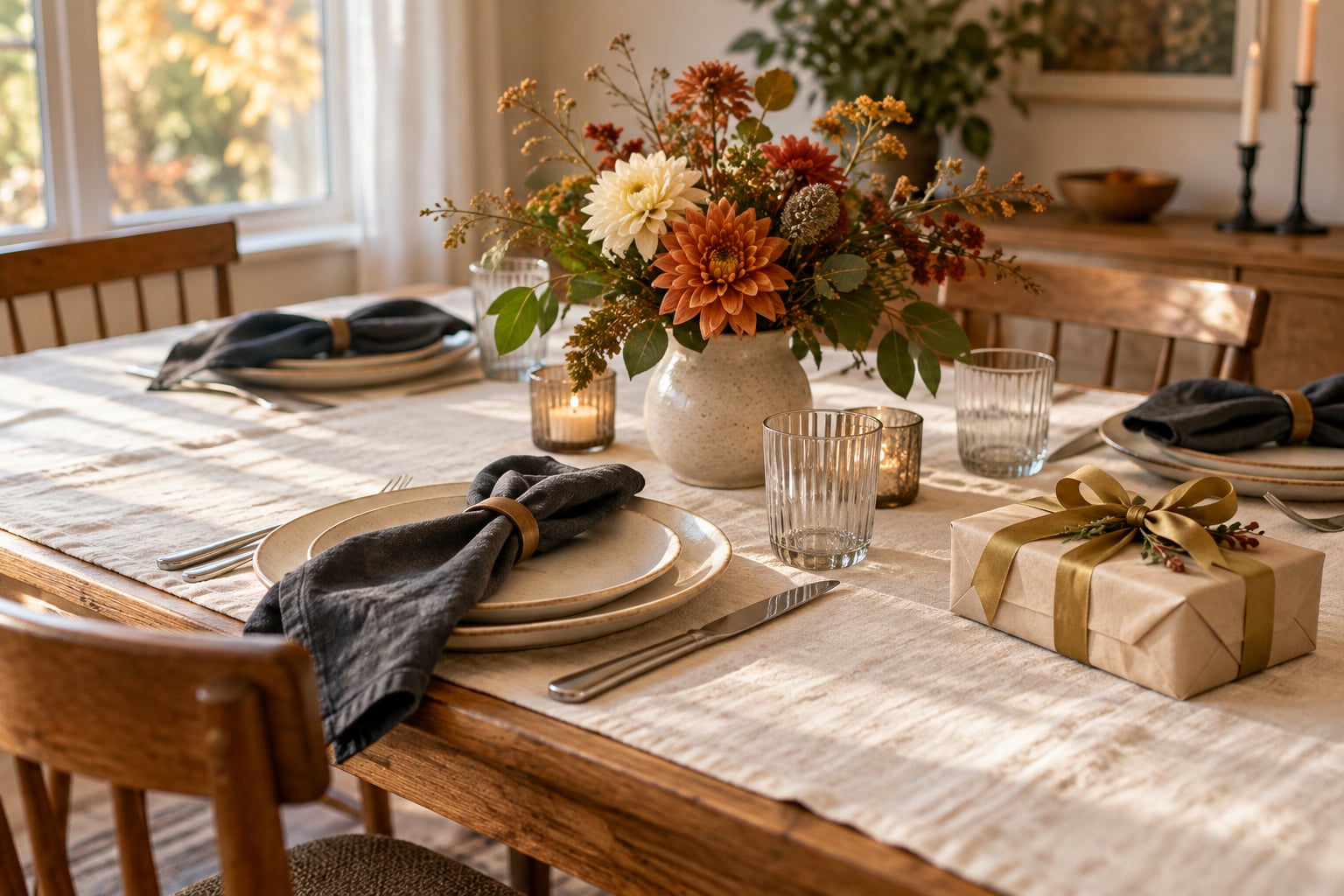
Thanksgiving planning gets easier when you make decisions in the right order. A centerpiece can wait. Knowing how many people are coming, what kind of meal you want, and what your kitchen can handle gives every later choice a useful starting point.
Want to put the first decisions on one page? Download the free Small Gathering Decision Sheet. Set the time, people, spending or preparation limit, and what you will skip before building the menu. One US Letter page to print and write on; no email signup.
First: settle the shape of the gathering
Confirm your likely guest count, a meal time, and whether you want a seated dinner, a buffet, or a more casual arrangement. Ask about food preferences and dietary needs before assigning dishes or buying ingredients.
If more than one household is hoping to see you, compare ways to split holiday visits without rushing before fixing the meal time. Separate days or alternating years may fit better than two meals in one day.
Decide what you want to make yourself and what you are happy to accept from guests. If someone asks what to bring, offer a specific job: a ready-to-serve side, dessert, drinks, or extra serving spoons. Explain whether the dish will need oven space when it arrives.
Next: build a menu your kitchen can manage
Write down the dishes you want, then mark which need the oven, stovetop, refrigerator, or counter space. If several dishes need the same appliance at the same time, simplify before shopping.
Choose the dishes that matter most to your household. You may want a traditional main dish and favorite sides, or a smaller menu with just one family favorite. A meal can feel generous without including every Thanksgiving dish you have ever enjoyed.
For each dish, note who is responsible, what serving dish it needs, and whether any preparation can happen earlier. Follow the recipe’s timing and storage guidance when making that plan.
When the sides are ready before the turkey
The potatoes are ready, the turkey still needs attention, and the rolls are waiting for their turn in the oven. Before buying another appliance, decide which dish actually needs help staying hot. A suitable slow cooker you already own may be enough. Check its instructions and capacity first; a covered crock won’t suit every dish or crisp topping.
The product links below are affiliate links. As an Amazon Associate, Daily Decide earns from qualifying purchases.
For one dish: the Hamilton Beach 33240 four-quart slow cooker in Brushed Gray has a round crock and manual low, high and warm settings. It’s the simpler choice when one side needs its own spot, rather than a whole serving station. The manufacturer lists a 12.1-inch width and 9.5-inch depth, so measure your space before adding it. Manufacturer details
For several dishes: the Proctor Silex 34300R triple buffet server provides three separate 2.5-quart pans. Consider it if you have room for a dedicated buffet, not just a gap beside the stove. It’s for holding already-hot food, not reheating, cooking or defrosting. Preheat it, follow the placement and supervision requirements, and don’t use its tray base for large, deep pots. Manufacturer details and manual
Reheating is a separate job. USDA recommends reheating chilled cooked food on the stove, in the microwave or in the oven to 165°F before transferring it to a preheated slow cooker. Don’t reheat leftovers in the slow cooker. USDA guidance
Check food with a thermometer throughout serving: hot food should stay at least 140°F, and cold food at 40°F or below. A warm setting or glowing light isn’t proof. Discard perishables left at room temperature beyond two hours, or one hour above 90°F. FDA buffet guidance
Then: check the practical pieces
Count seats, plates, glasses, and flatware. Mix what you already own before buying a matching set. Check that serving utensils and a place for each dish are included in your count.
If a new turkey platter is on your list, compare two Thanksgiving platter styles and check serving space and storage first.
If you need to order missing supplies, check delivery estimates and renewal terms before signing up for shipping benefits. Prime is optional; compare the non-member delivery options first.
Think through how people will move around the room. A separate drink station may free up the kitchen. An empty surface can become a dessert table later. Leave a spot for bags and coats so chairs remain available for guests. If the closet is already full, choose a temporary spot for guests’ coats before everyone arrives.
If shoes and bags usually land in the living room, compare entryway setups that keep the route clear, including the no-new-furniture option.
What can wait
Decorations, elaborate place cards, a second dessert, and special serving pieces belong after the main decisions. Choose one small detail if you enjoy setting the scene: cloth napkins, a few seasonal branches, or handwritten names.
If your list starts growing, ask whether each addition helps people eat comfortably, feel welcome, or spend time together. That question makes it easier to set aside work that does not matter to you.
Your final planning checklist
- Guest count and arrival details confirmed.
- Menu agreed, with guest contributions assigned.
- Shopping list checked against the pantry.
- Appliance and preparation schedule written down.
- Seating, tableware, and serving pieces counted.
- One small task ready to hand to anyone who offers help.
A workable Thanksgiving plan leaves room for conversation and the unexpected. Once the essentials are covered, let the meal reflect the people around your table.
Choose one useful Thanksgiving extra
Once the meal plan is settled, pick the part that would make your day easier. You don’t need to do all of these.
- Keep hands busy: the free Thanksgiving printable sampler has coloring, a leaf craft and a read-aloud game, with links to our larger turkey game and place cards. No email signup.
- Add something personal: try Thanksgiving tree ideas with paper gratitude tags and decorations you already own. Flocked trees work, too.
- Check the kitchen: use our Thanksgiving kitchen-tool gap check before buying another utensil.
- Get ready for holiday shopping: make a Black Friday shortlist with measurements and a spending limit, then sort the wrapping supplies you already have.