
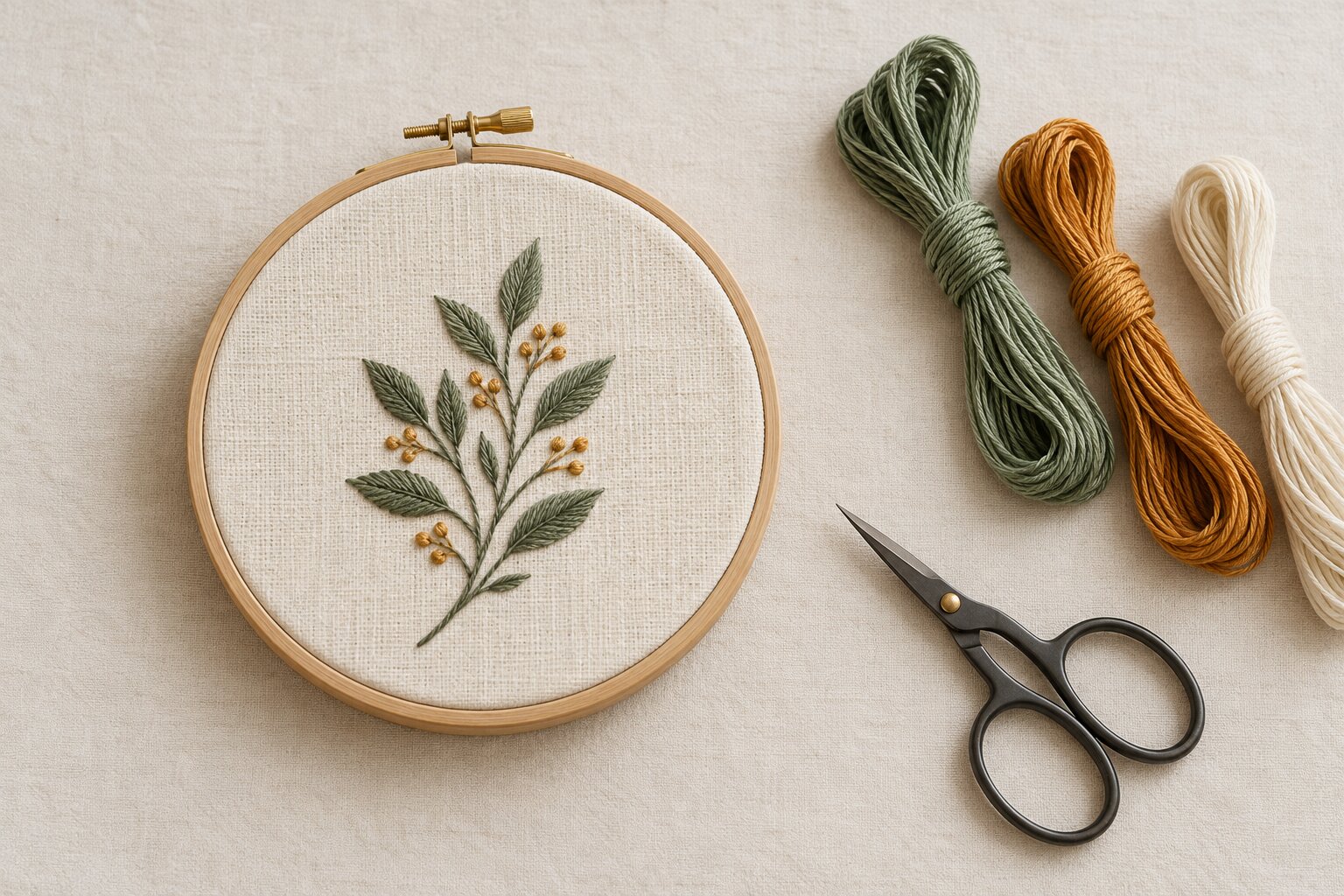
AI-generated illustration; not a specific product kit.
You wanted something to do with your hands in the evening. Now you have twelve embroidery kits open, and one of them seems to require an entire second shopping trip.
Start with what you want to have at the end: a piece you can display, a set of stitches you understand, or a small experiment to see whether you enjoy it. Those are three different shopping lists.
Choose the result before the pretty picture
Want to finish one particular design? Choose a project kit. Look for a picture you actually want to spend time making, then check the finished size, required stitches and instructions. A small hoop can still contain lots of detailed stitching. “Beginner” is a useful label, but it cannot tell you whether you will enjoy the project.
Want to learn the stitches first? Choose a sampler or learning kit. A sampler gives you somewhere to practice different stitches without making every line part of your final decoration. This may suit you if understanding the technique sounds more appealing than copying one finished picture. Check that instruction is included, not just a fabric sheet printed with stitch names.
Already have suitable tools and thread? Consider a pattern-only option. Read the supply list before ordering. A downloadable pattern, a printed transfer and a bundle of materials are different purchases. Check whether you need to print anything, transfer the design yourself or supply the fabric.
These categories can overlap. Some learning kits include designs to make after the practice work. The useful question is: “What will this help me do first?”
Check what you can actually start with
Before adding a kit to your cart, find its contents list and answer five questions:
- Where does the design go? Is fabric included and already marked, or do you need a separate transfer step?
- What holds the fabric? Is a suitable hoop included? Do not assume the hoop in a styled photograph comes in the package.
- What does the stitching require? Check for the specified thread, needles and any cutting tools you do not already own.
- How will you learn? Look for written instructions, clear stitch diagrams or a demonstration you can pause. Check whether videos require internet access.
- What happens at the end? Find out whether displaying or using the finished piece requires extra backing, framing or another item.
Keep the first purchase limited to that project. A large thread collection and matching storage system can wait until you know what you like doing.
One learning kit to consider
The Learn Embroidery Stitch by Stitch with Missouri Star kit, SKU ASY490, is worth considering if you want practice before choosing a bigger project.
Missouri Star lists instruction for 11 stitches and nine Peel and Stitch designs. Its published contents include an instructional booklet, a 7-inch hoop, DMC floss, needles, a needle threader, scissors, a preprinted fabric stitch guide, wash-away design sheets and a cotton tea towel. A project bag and small organizing accessories are also listed. See the manufacturer’s contents list.
This is a researched option, not a kit we have tested. Consider it for learning several stitches and then trying a design. Skip it if you already own the supplies or only want to make one specific picture. Check the selected kit and its current contents before ordering; future projects may require other materials.
As an Amazon Associate I earn from qualifying purchases.
View the Missouri Star learning kit on Amazon (paid link)
Give the first session a smaller job
Before buying, watch part of a lesson and see whether the process appeals to you. Missouri Star’s Embroidery 101 series covers materials, setup and individual stitches. You can begin with the basics rather than committing to a whole design.
If you already have suitable supplies, try one short practice line first. Follow your pattern’s thread instructions: DMC explains that stranded floss is separated and recombined in the quantity the design calls for. Its strand-separation guide shows the process.
Set out only what you need, work somewhere well lit, and put needles and scissors away securely when you stop. Your first session can simply be learning the setup and trying a stitch. There is no need to promise yourself a finished gift by the weekend.
If embroidery does not sound appealing after that preview, leave the kit in the cart. Our rainy-day-at-home ideas offer other ways to spend an afternoon without making shopping the activity.