
Quick answer
Decide whether you are hosting a watch party or a relaxed gathering with football in the background. Then agree on arrival time, food contributions, seating, and how the evening will end. Those choices matter more than decorations or a long shopping list.
Tell guests what kind of night you mean
“Come over for the game” can mean very different things. One person expects to hear every play; another is looking forward to catching up. Neither is wrong, but a little clarity helps everyone enjoy the invitation.
Choose the version that fits your group:
- Watching comes first: keep the main viewing area focused on the game and plan conversation around breaks.
- Football and catching up: leave room for people to move between watching and talking.
- A short visit: invite people for the first half or a particular stretch of the evening rather than assuming everyone can stay until the end.
Your invitation can be simple: “We’re watching at home, with food before the game. Come from [arrival time]; kickoff is [confirmed time]. Let me know how many of you can make it and whether you need to leave early.” Add “We’ll keep the TV area focused on the game” or “We’re mostly catching up with football in the background,” depending on your plan. Replace the placeholders after checking the actual event details. Mention whether children or additional guests are included so nobody has to guess.
Make one shared plan for food
Choose who is handling the main food, then accept contributions that fill a gap. Keep the answers in one message thread or short list. Otherwise, several generous offers can turn into three desserts and no dinner.
For each contribution, note the person, what they are bringing, and whether it needs preparation space on arrival. A useful offer might also be setting out chairs or helping clear up. Guests do not all need to buy something.
Use our prep-ahead football menu for the food choices. If you are attending rather than hosting, start with what to bring when you are invited over.
Plan for the people who are coming
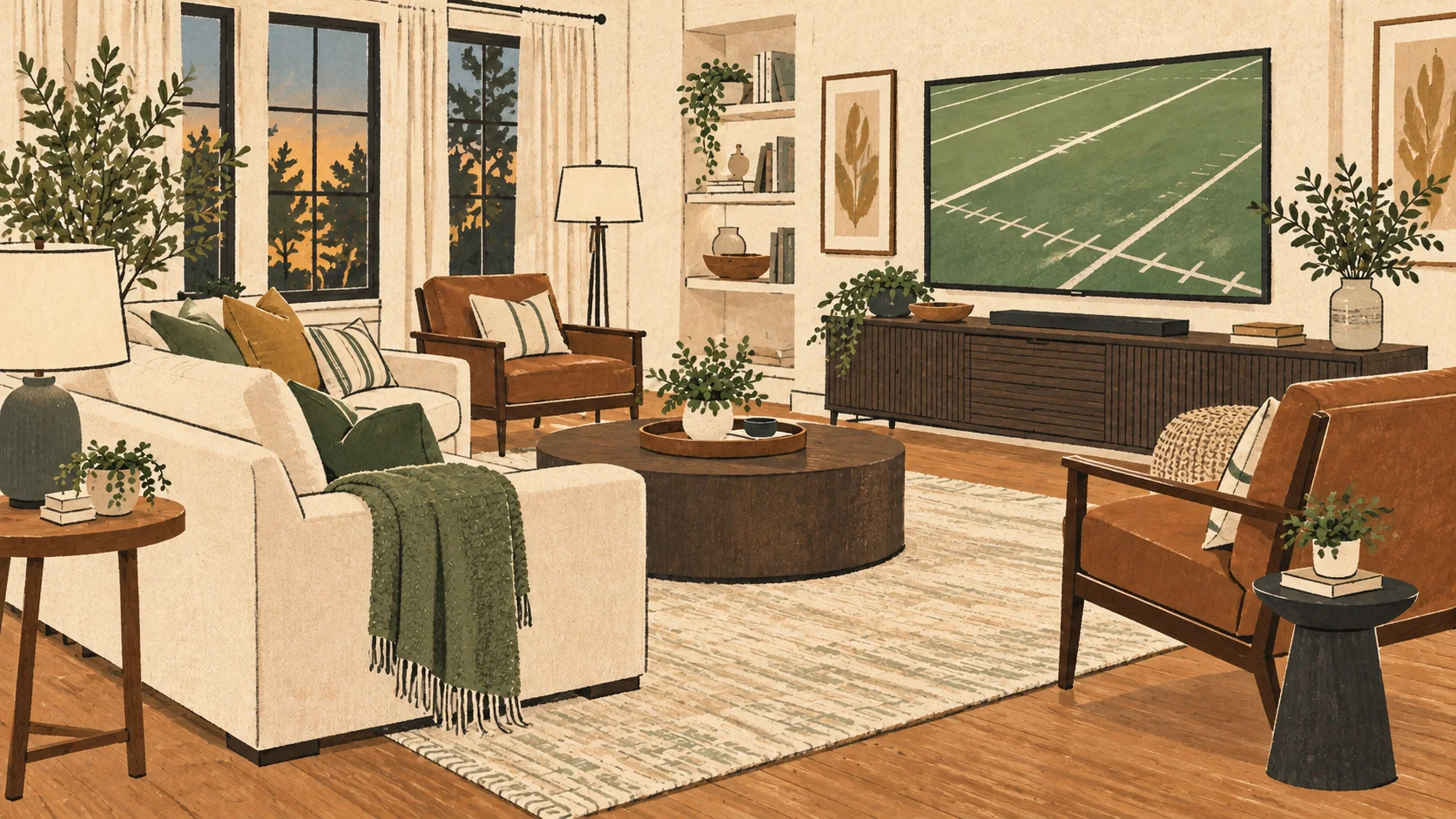
Before assigning every chair to the best screen view, ask whether anyone needs a particular seat or an easier route through the room. Keep walking paths clear. Sit in each planned spot once to check the screen view before guests arrive. Do not assume every guest will be comfortable on a floor cushion or able to hear the television over a busy conversation.
If your space allows, make a separate place for chatting. It does not need to be another decorated room: a few seats away from the screen can be enough. If there is no separate space, agree on how to balance watching and conversation in the same small room.
For a family gathering, agree with the adults on children’s activities and supervision. An alternative activity should be an option, not an obligation for everyone who is less interested in football.
Remove the last-minute decisions
Confirm the viewing arrangement before guests arrive, including the correct event and access on the device you will use. If it does not work, tell guests about the change rather than making an unplanned purchase under pressure.
Choose your own comfortable game-night outfit before the final setup. For supplies, use what to buy and what to skip instead of starting another shopping list.
Give the evening an easy finish
If you have an early start the next morning, say so in the invitation. A finish time is helpful information, not an apology. Guests who need to leave before the game ends should feel comfortable doing that, too.
Before everyone leaves, return borrowed serving pieces and collect abandoned glasses. Accept a specific offer of help when useful, but avoid making cleanup the price of being invited. Leave optional tidying for later if it lets you enjoy the last part of the gathering.
The host’s final check
- Guests know the arrival time and the kind of gathering.
- Contributions are agreed rather than duplicated.
- Viewing arrangements have been checked.
- Seating and clear paths suit the people coming.
- Anyone joining with children knows the plan.
- The evening’s finish is understood.
When those decisions are made, stop adding jobs. The point is to spend the evening with your guests, not to keep improving the party while it happens.